





Hire the best MongoDB developers in Latin America
















400k+
ENGINEERS
14 days
to hire
100+
COVERED
30-50%
US hires
Why hire MongoDB developers through Revelo?
Rigorously vetted senior developers from Latin America who work in your timezone, ready to contribute from day one.
Interview only the best MongoDB developers
A shortlist of three to five pre-vetted candidates, hand-picked by in-market recruiters. You decide who to interview, you decide who to hire.




One platform for talent, payroll, taxes and compliance
Your team runs legally across 18 countries in Latin America. Manage your engineers without managing the infrastructure underneath them.




Local recruiting experts invested in your hire
In-market recruiters and account managers cover sourcing, offer strategy, and onboarding. They stay with you until your engineer is up and running.


Your team, your terms
Month-to-month engagements mean you're never locked into headcount you don't need. Scale up for a big push, pull back after launch.





Hire the top 1% of developers in Latin America
Hire vetted senior developers, matched to your stack, your timezone, and your budget.




Hire MongoDB developers in 4 simple steps
Get from "we need someone" to your first day together in weeks, not months.
Tell us what you're building and what kind of MongoDB developers you need: skills, experience level, team dynamics.
Three to five matched, pre-vetted candidates: identity-checked, skills-tested, human-screened. No wading through hundreds of profiles.
Run your own technical interviews. You decide who to interview and who to hire. Full control, no gatekeeping.
Make the offer. Revelo handles payroll, benefits, taxes, and compliance so you can focus on building. Your engineer ships code from day one.
10+ years making it easier to hire elite nearshore MongoDB developers
Interview pre-vetted candidates who are fluent in English and work in your timezone.
Start hiring
Why hire developers based in Latin America?
Work synchronously with MongoDB developers in the same or overlapping US time zones. Real-time collaboration, no async tax.










What are MongoDB developers?
Why hire MongoDB developers?
What does it cost to hire MongoDB developers?
Why hire in Latin America?
How to evaluate MongoDB developers
Why expertise matters
Benefits of working with MongoDB developers
MongoDB developers are crucial for companies that want to build scalable, high-performance applications using this flexible, document-based database. These experts have comprehensive knowledge of MongoDB principles and design efficient data models while optimizing performance and ensuring data integrity. MongoDB developers’ adeptness in various programming languages enables the seamless integration of MongoDB into the application development process, helping web and mobile applications operate efficiently.
However, hiring the top MongoDB developers is challenging in the current landscape. The high demand for these experts in the tech market often leads to a competitive hiring environment for both startups and established industry leaders. Identifying the right candidate who possesses the technical prowess and fits into the company’s culture and project requirements is daunting. Overcoming these obstacles with the assistance of a talent marketplace lays a solid foundation for robust application development with MongoDB.
What Is MongoDB?
MongoDB is a popular open-source NoSQL database system used to design, implement, and manage databases. Unlike traditional relational databases that rely on tables and rows, MongoDB stores data in flexible BSON (Binary JSON) documents that help manage complex data structures efficiently, making it ideal for projects that require high scalability and performance.
Examples of projects that benefit from this development include large-scale web applications with millions of users or real-time analytics platforms handling vast amounts of unstructured data. Additionally, e-commerce systems and social media apps with constantly changing requirements leverage the flexibility offered by MongoDB to adapt quickly while maintaining optimal performance levels.


Why MongoDB?
MongoDB development is helpful for web development because it offers remarkable flexibility. Unlike traditional relational databases, MongoDB's flexible, document-based structure allows for more intuitive data handling. It stores data in a format similar to JSON, aligned with how developers think and code, making data easy to read and write.
Additionally, with MongoDB, developers work with various programming languages, showcasing its versatility. This interoperability is crucial in accelerating the development process with streamlined project management and on-time goal completion.
Finally, MongoDB shines in scenarios demanding scalability. As a business grows, so does its data and the need for robust, scalable solutions. MongoDB developers are adept at crafting databases that scale horizontally, ensuring the system handles an influx of data and user requests without issues. This scalability enhances web and mobile applications, ensuring they remain responsive and perform well regardless of the load.
Benefits of MongoDB Development
MongoDB's schema flexibility, rich query language, and high availability ensure that web apps perform efficiently and effortlessly handle large data sets and high traffic. The blend of these advantages makes MongoDB a compelling choice for modern web development, ensuring projects are robust and scalable.
Schema Flexibility
MongoDB’s schema flexibility allows developers to create documents without first defining their structure. Each document can have its own unique structure. This aligns well with object-oriented programming, making data easy to work with and adaptable to each project’s needs.
The fluid schema design also accelerates the development process because modifications to the data model can be made on the fly without costly downtime. This dynamism is particularly beneficial in agile project environments or when iterating rapidly on an application, ensuring that database architecture doesn't slow down the pace of innovation.
Rich Query Language
With MongoDB's rich query language, developers build applications with complex search functionalities. This language supports range queries and regular expression searches, allowing programmers to run queries to retrieve exactly the data needed without unnecessary post-processing.
The rich query capability contributes to high-performance data retrieval and manipulation, pivotal for real-time applications and analytics. Moreover, it allows for data indexing, enabling even faster searches and ensuring that applications run efficiently and effectively as data volumes grow.
High Availability
Through its replication and sharding capabilities, MongoDB ensures data availability even in the event of network failures or hardware issues. Replication provides redundancy and increases data availability, whereas sharding is about distributing data across many machines so the database scales horizontally to meet the demands of growing data and traffic.
A well-engineered MongoDB database provides a solid foundation for development services aiming for continuous uptime and data resilience. Its design aids in maintaining a high level of service and data integrity, which are critical in today's demanding digital landscape, making MongoDB an attractive choice for enterprises that cannot afford downtime or data loss.
What Does a MongoDB Developer Do?
A MongoDB developer's primary goal is to design, implement, and manage MongoDB databases that efficiently handle an application's data storage needs. Their day-to-day responsibilities revolve around understanding project requirements, designing suitable data models, optimizing database queries, and collaborating with other development team members on system integration.
Typical tasks for a MongoDB developer include the following:
- Analyzing project requirements and determining the best database architecture
- Designing efficient data schemas to meet specific use cases
- Implementing indexing strategies for improved query performance
- Ensuring data integrity with validation rules or constraints
- Collaborating between frontend and backend developers on REST API development for seamless interaction between application logic and database systems
Ultimately, the developer's objective is to create robust solutions that seamlessly scale as applications grow in complexity.
Required Skills and Qualifications
To hire top MongoDB developers, hiring teams should look for a blend of technical, hard, and soft skills. Candidates need a thorough understanding of MongoDB, Node.js, JavaScript, PHP, Python, and SQL (including MySQL). Developers commonly use these in conjunction with MongoDB for various back-end and full-stack development projects. Knowledge of JSON, the format in which MongoDB stores data, is also crucial.
If the role involves full-stack development or front-end development in a stack that uses Angular for the front end and MongoDB for the database layer, knowledge of Angular would be beneficial. It's not uncommon for full-stack developers working in environments using MongoDB to have experience with front-end frameworks like Angular, Express, React, or Vue.js.
Additionally, experience with mobile application development for platforms like Android and iOS is a significant asset, as MongoDB typically serves as the back-end database for mobile applications. Given the collaborative nature of development projects, soft skills like effective communication, problem-solving, and the ability to work well in a team are also important.
Typical education requirements include a bachelor’s degree in computer science or a related field or relevant experience. Regardless, candidates should possess a strong portfolio showcasing the technical skills required in the role. Certifications like the MongoDB Certified Developer or DBA may further attest to technical skills.
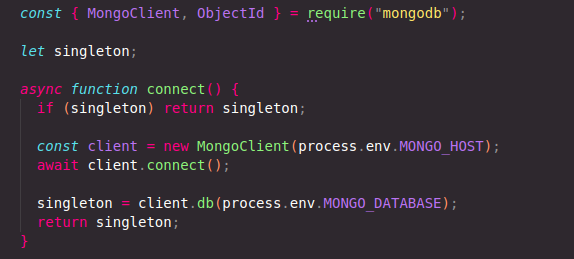
Popular MongoDB-Related Languages and Libraries
In MongoDB development, choosing languages and libraries is critical in efficiently managing data and integrating with various applications. JavaScript, Python, and Ruby are key languages due to their natural compatibility with MongoDB's BSON data format and ease of interaction through various libraries like Mongoose, PyMongo, and MongoEngine. These libraries provide structured and straightforward ways to model and manage data — invaluable in modern application and machine learning projects.
Related Languages
Three of the most relevant related languages for MongoDB are:
- JavaScript: MongoDB stores data in a format called BSON, similar to the JavaScript Object Notation (JSON), making JavaScript a natural choice for interacting with MongoDB databases.
- Python: Through libraries like PyMongo, Python developers easily interact with MongoDB databases, allowing for seamless data manipulation and retrieval in Python-based applications.
- Ruby: Similar to Python, Ruby developers interact with MongoDB using libraries such as the MongoDB Ruby Driver, facilitating the creation and management of MongoDB databases within Ruby-based projects.
Related Libraries
Experienced MongoDB developers will typically be familiar with some of these libraries:
- Mongoose: Mongoose acts as a straightforward, schema-based solution to model application data, providing a neat structure to interact with MongoDB using JavaScript.
- PyMongo: PyMongo serves as a driver for MongoDB, facilitating a way for Python applications to work with the database and manage data effectively.
- MongoEngine: MongoEngine is an Object Document Mapper (ODM) for MongoDB and Python, simplifying the process of working with MongoDB by providing a high-level abstraction.
Popular MongoDB Programming Tools
When looking to hire MongoDB developers, keep an eye out for proficiency with at least some of the following tools:
- Studio 3T: Streamlines complex MongoDB tasks and allows developers to manage databases, collections, or documents easily
- Robo 3T (formerly Robomongo): Provides a user-friendly interface, making it easier for developers to manage and manipulate MongoDB databases
- NoSQLBooster: Enhances MongoDB scripting with a full JavaScript environment, aiding in testing queries and managing data
- MongoDB Compass: Visualizes data so developers understand and optimize their queries effectively
- Navicat for MongoDB: Facilitates the management and development of MongoDB databases with a clear and intuitive interface
How Does MongoDB Fit Into Modern Back-End and App Development?
MongoDB provides the backbone for data management in both front-end and back-end development. On the back end, MongoDB stores data in a flexible, scalable manner, making it easier for developers to work with large datasets and ensure seamless data flow within the application. For example, a health-tech company can use MongoDB to handle vast patient data, ensuring quick access and secure storage.
For app development, MongoDB provides scalable data management. This enhances user experience and app efficiency as user volume grows. For example, in a food delivery app, MongoDB efficiently manages vast amounts of data regarding restaurants, menus, user profiles, and order histories. Its ability to manage unstructured data allows for a smooth integration of varied menu formats, user reviews, and real-time order tracking.
â€


How Much Does It Cost to Hire a
Frequently asked questions
Everything you need to know about hiring MongoDB developers through Revelo.
How much does it cost to hire MongoDB developers through Revelo?
All-in monthly costs run roughly $4,600–$5,600 for junior, $5,800–$7,500 for mid-level, and $7,200–$10,700 for senior developers: engineer compensation, PEO coverage, and Revelo's margin combined. No placement fee, no surprise invoices.
How quickly can I hire MongoDB developers through Revelo?
You'll see a curated shortlist of matched, pre-vetted candidates within 72 hours, and most companies make a hire within 14 days of sharing their requirements.
What is Revelo's vetting process for MongoDB developers?
Every candidate is identity-checked, skills-tested, and human-screened: technical assessments matched to their stack, soft-skills and English-fluency interviews, and review by in-market recruiting experts before they ever reach your shortlist.
What engagement models does Revelo offer for MongoDB developers?
Month-to-month, full-time engagements, with no long-term lock-in. Scale up for a big push or pull back after launch as your roadmap evolves, with a 14-day risk-free trial on every hire.
What happens after I hire MongoDB developers through Revelo?
Revelo handles payroll, benefits, taxes, and compliance across 18 countries, and your dedicated account manager stays with you through onboarding and beyond. Your engineer ships code from day one.
Our MongoDB developers know these tech stacks and more
Our talent is experienced in these libraries, APIs, platforms, frameworks, and databases.
Ready to hire MongoDB developers?
See a curated shortlist of pre-vetted candidates in 72 hours. Only pay if you hire.